
What Is Conversational AI? Guide, Examples, and Platforms (2026)
By the Chatgbot Team · Published July 22, 2026
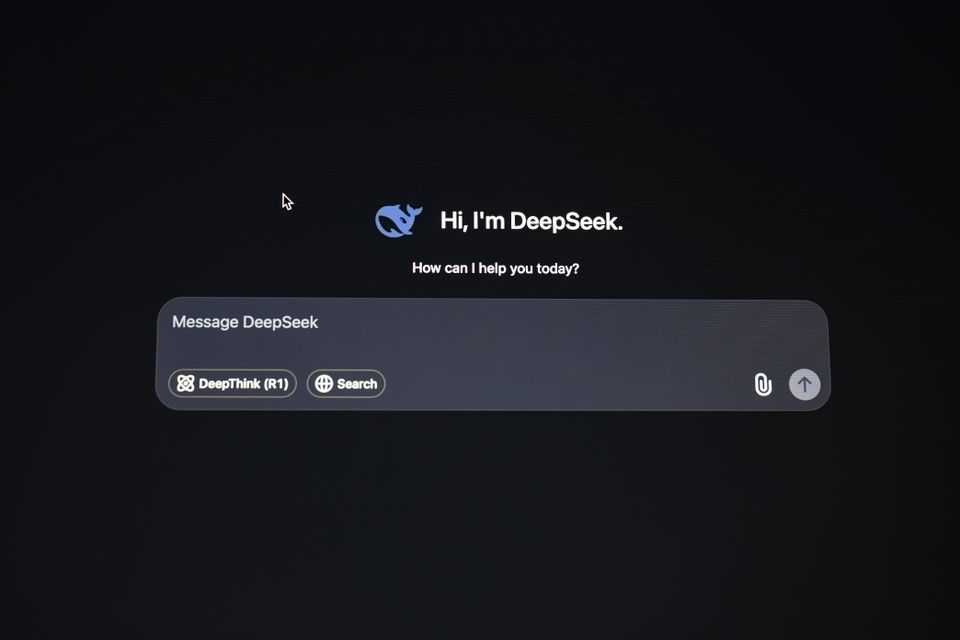
Conversational AI is technology that lets machines understand human language and respond in a natural, back-and-forth way, through text or voice. Instead of clicking through menus, you just say or type what you want, and the system figures out your intent and answers.
This guide explains what conversational AI is, how it differs from a basic scripted bot, the building blocks behind it, and where you already run into it every day. It is written for people making product and business decisions, so it stays practical and light on math.
What conversational AI actually means
Conversational AI is a category of software that can hold a natural-language exchange with a person. It takes in what you write or say, works out what you mean, decides how to respond, and produces a reply that reads or sounds human.
The key word is conversational. A good system keeps track of context across several turns, so you can ask a follow-up without repeating yourself, and it handles the messy ways real people phrase things.
It is closely related to the broader idea of a chatbot, but conversational AI describes the intelligence layer, not just the chat window. That intelligence can live inside a support widget, a phone line, a smart speaker, or a mobile app.
Conversational AI vs. a basic scripted chatbot
Not every chatbot is conversational AI. The difference comes down to whether the system understands language or just matches it.
A scripted (rule-based) chatbot follows a decision tree. It looks for specific keywords or button clicks and returns pre-written replies. Ask something the script did not anticipate, and it stalls or repeats itself.
A conversational AI system interprets meaning. It can understand "my payment did not go through" and "you charged me twice" as the same underlying problem, even if it saw neither phrasing before.
| Scripted chatbot | Conversational AI |
|---|---|
| Keyword and button matching | Understands intent and meaning |
| Fixed, pre-written replies | Generated, context-aware replies |
| Breaks on unexpected input | Handles varied phrasing |
| Little or no memory | Tracks context across turns |
The building blocks, in plain terms
Under the hood, conversational AI combines a few components. Knowing the names helps you evaluate tools.
- Natural language understanding (NLU): the part that reads your input and extracts intent (what you want) and entities (the specifics, like a date or order number).
- Dialogue management: the decision-maker that tracks the conversation, remembers context, and chooses the next step, such as answering, asking a clarifying question, or handing off to a human.
- Natural language generation (NLG): the part that turns a decision into a fluent, readable reply instead of a canned template.
- Speech (ASR and TTS): for voice systems, speech recognition converts your words to text, and text-to-speech converts the reply back into a spoken voice.
Modern systems increasingly fold several of these steps into a single large language model, which is why today's assistants feel so much more fluid than the voice menus of a decade ago.
Everyday examples of conversational AI
You almost certainly use conversational AI already, often without realizing it.
- Virtual assistants: tools like Siri, Alexa, and Google Assistant that take voice commands and answer questions.
- Customer support bots: the chat widgets that answer questions, check order status, and resolve simple issues on websites.
- IVR phone systems: the "tell me why you're calling" phone lines that now understand full sentences instead of "press 1 for billing."
- AI chatbots: general-purpose assistants like ChatGPT, Claude, and Gemini that can write, explain, brainstorm, and hold open-ended conversations.
The last group is the most flexible, because it is built directly on large language models rather than narrow, task-specific scripts.
Business uses and benefits
For companies, conversational AI is attractive because it scales conversation. One system can handle thousands of chats at once without a queue.
The most common business uses include:
- Customer support: resolving routine questions instantly, around the clock, and escalating the hard ones to staff.
- Lead generation and sales: qualifying visitors, answering product questions, and booking demos before a human gets involved.
- Internal help desks: answering employee questions about IT, HR policies, and internal tools so teams spend less time searching.
The benefits are faster response times, lower cost per interaction, and freeing skilled staff for work that genuinely needs a person. If you are weighing options, our roundup of the best AI tools for business covers where these systems fit.

Conversational AI platforms, at a glance
A conversational AI platform is the software you use to build, train, and deploy these assistants. Qualitatively, platforms tend to differ along a few lines.
Some are developer frameworks with deep control over intents and integrations, at the cost of more setup. Others are no-code builders aimed at support teams who want to launch quickly. A newer wave is built directly around large language models, so the assistant can answer from your documents with far less manual scripting.
Key things to compare are how well a platform understands language, how easily it connects to your existing tools, how it hands off to humans, and how it handles privacy. For a deeper look at the landscape, see our guide to AI chatbot platforms.
Limitations and common pitfalls
Conversational AI is powerful, but it is not magic. Planning for its weak spots is what separates a helpful assistant from a frustrating one.
- Hallucinations: LLM-based systems can state wrong information confidently. Ground them in trusted sources and review high-stakes answers.
- Ambiguity: vague or unusual requests can still trip up understanding, so a clean handoff to a human matters.
- Context limits: very long conversations can lose track of earlier detail.
- Tone and trust: a bot that pretends to be human, or cannot admit it does not know, erodes trust fast.
The fix is rarely more automation. It is clear scope, honest fallbacks, and keeping people in the loop where the cost of a mistake is high.
How conversational AI relates to LLMs
Today's most capable conversational AI runs on large language models. An LLM is a model trained on huge amounts of text to predict and generate language, which makes it excellent at understanding intent and writing fluent replies.
Conversational AI is the broader application, and an LLM is often the engine inside it. You still wrap the model with dialogue logic, connections to your data, and guardrails, but the model does the heavy lifting of understanding and generation. To go deeper on the engine itself, read what is an LLM.
Try leading conversational models in one app
Different models have different strengths, and no single one wins at everything. That is exactly why picking just one can hold you back.
Chatgbot puts the leading conversational AI models in a single app. You can chat with GPT-5.6, Claude, Gemini, Grok, and DeepSeek, switch between them mid-conversation, and compare their answers side by side, all under one subscription. It is the simplest way to experience conversational AI without committing to a single provider.
Frequently asked questions
Is conversational AI the same as a chatbot?
Not exactly. Every conversational AI system can power a chatbot, but not every chatbot is conversational AI. Simple bots follow scripts and match keywords, while conversational AI actually understands language and intent.
Does conversational AI only work through text?
No. It works through both text and voice. Voice systems add speech recognition to turn your words into text and text-to-speech to speak the reply, which is how virtual assistants and modern phone systems work.
What is the difference between conversational AI and an LLM?
An LLM is the underlying model that understands and generates language. Conversational AI is the larger application that wraps an LLM with dialogue management, data connections, and guardrails to hold a useful conversation.
Are conversational AI apps safe to use for business?
They can be, with the right setup. Ground answers in trusted data, keep humans in the loop for high-stakes cases, and check how each platform handles privacy before deploying it.
The easiest way to explore conversational AI
Conversational AI has moved from clunky phone menus to assistants that genuinely understand you. The fastest way to see how far it has come is to talk to the top models yourself. Chatgbot lets you do that with GPT-5.6, Claude, Gemini, Grok, and DeepSeek in one place, so you can find the right model for each task instead of settling for one.