
What Is AI? Artificial Intelligence Explained Simply (2026)
By the Chatgbot Team · Published July 22, 2026
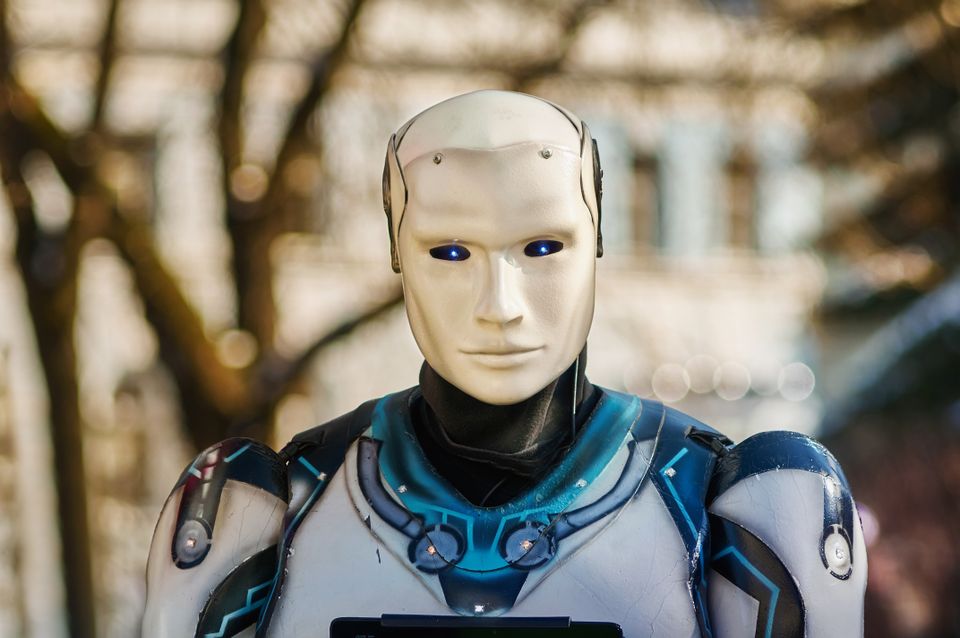
Artificial intelligence (AI) is computer software that performs tasks that normally require human intelligence, such as understanding language, recognizing images, and making decisions. Instead of following fixed rules written line by line by a programmer, modern AI learns patterns from large amounts of data and uses those patterns to answer questions, generate content, and make predictions.
Every top AI in one app
GPT, Claude, DeepSeek, Qwen and GLM — one subscription.
Try ChatGBot →That definition covers everything from the chatbot on your phone to the system that decides which video plays next. AI is not one single technology. It is a family of techniques, and in 2026 most of the AI you actually touch is powered by one branch of it, machine learning.
This guide explains the AI meaning in plain English: the main types you meet every day, where the field came from, how it learns, what it can and cannot do, and how to try it yourself in about a minute.
The plain-English definition of AI
Strip away the jargon and AI comes down to one idea: software that can handle tasks we used to think only people could do. Reading a paragraph and summarizing it. Looking at a photo and naming what is in it. Hearing a sentence and translating it.
Traditional software follows explicit instructions. If a programmer did not write a rule for a situation, the program fails. AI systems are different. They are trained on examples rather than programmed with rules, so they can handle inputs nobody wrote a rule for, like a question phrased in a way no one has ever typed before.
Two related terms are worth separating. Machine learning is the method most AI uses today, learning patterns from data. Generative AI is the newest wave, systems that create new text, images, audio, or video instead of just classifying what already exists. You can read a deeper breakdown in our guide to what generative AI is.
The main types of AI you actually meet
Textbooks split AI into many categories, but in daily life you mostly meet four kinds:
- Chatbots and LLMs. Large language models like GPT-5.6, Claude, and Gemini power conversational assistants that answer questions, write drafts, and explain code. If the differences between them feel confusing, our guide to AI models explained walks through the major families.
- Image and video generators. These turn a text description into a picture or a short clip. Type "a watercolor fox in the snow" and get exactly that.
- Recommendation systems. The quiet workhorses of AI. They pick your next video, song, product, or social post by predicting what you are likely to engage with.
- AI agents. The newest category. Agents do not just answer, they act: browsing, filling forms, and completing multi-step tasks with limited supervision. See what AI agents are for a full explanation.
A very short history of AI
People often ask who invented AI. No single person did, but a few moments defined the field:
- 1950, Alan Turing. The British mathematician asked whether machines can think and proposed the famous Turing test, a way to judge whether a machine's conversation is indistinguishable from a human's.
- 1956, the Dartmouth workshop. Computer scientist John McCarthy coined the term "artificial intelligence" at a summer research project at Dartmouth College. This is usually treated as the official birth of AI as a field.
- The neural network era. After decades of slow progress and funding winters, researchers in the 2010s showed that neural networks, loosely inspired by the brain, could master image recognition, speech, and translation when given enough data and computing power.
- November 2022, the ChatGPT moment. OpenAI released ChatGPT and AI went from research topic to household tool almost overnight. Everything since, from GPT-5.6 to Claude to Gemini, builds on that shift.
How modern AI actually learns
Modern AI systems are trained, not programmed. A large language model reads enormous amounts of text and repeatedly plays one game: predict the next word. Do that billions of times, adjusting internal settings after every mistake, and the model gets remarkably good at producing fluent, useful language.
The key point is that this is pattern matching at massive scale, not understanding in the human sense. The model has no consciousness, no feelings, and no goals of its own. It does not know things the way you do. It has learned statistical relationships between words and ideas, which turns out to be surprisingly powerful.
That also explains AI's most famous flaw. Because a model predicts plausible text rather than looking up verified facts, it can sometimes state wrong information confidently. People call these errors hallucinations, and they are the main reason you should double-check important answers.
What AI can and cannot do today
In 2026, AI is genuinely good at drafting and editing text, summarizing long documents, translating languages, writing and debugging code, generating images, brainstorming, and tutoring. It is fast, tireless, and available at 2 a.m.
It still has clear limits. AI can invent facts, struggle with precise math unless it uses tools, miss context a human would catch instantly, and reflect biases from its training data. It cannot truly verify what happened in the world five minutes ago unless it is connected to search, and it cannot take responsibility for a decision. Think of it as a brilliant, occasionally overconfident assistant, not an oracle.
Everyday examples you already use
- Autocomplete and spam filters in your email
- Face unlock and photo search on your phone
- Navigation apps predicting traffic
- Voice assistants setting timers and answering questions
- Streaming and shopping recommendations
Common myths about AI
- "AI is conscious." No. Chatbots produce human-like text because they trained on human writing, not because anyone is home.
- "AI is always right." No. Models hallucinate, and confident tone is not evidence of accuracy.
- "AI will replace everyone's job." The realistic picture is that AI changes jobs by automating tasks. People who use AI well tend to outperform people who ignore it.
- "AI is just a fad." Recommendation systems alone quietly shape most of what you watch and buy. The technology is already woven into daily life.
Mini glossary: 4 terms worth knowing
- LLM (large language model): an AI model trained on huge amounts of text to understand and generate language. GPT-5.6 and Claude are LLMs.
- Generative AI: AI that creates new content, such as text, images, audio, or video, rather than only analyzing existing data.
- Agent: an AI system that can take actions toward a goal, like researching a topic across the web or completing a multi-step task.
- Prompt: the instruction or question you give an AI. Better prompts get better answers.
How to try AI yourself today
The fastest way to understand AI is to use it. Open a chatbot and give it a real task from your day: "Summarize this email thread", "Explain compound interest like I am 12", or "Write three subject lines for this newsletter". If you are brand new, our walkthrough on how to use ChatGPT covers the basics in a few minutes.
One practical tip: different models have different strengths. One may write more naturally while another reasons through problems more carefully, so it pays to compare answers instead of relying on a single model.
Frequently asked questions
What does AI stand for?
AI stands for artificial intelligence, computer systems that perform tasks normally requiring human intelligence, such as understanding language, recognizing images, and making decisions.
Who invented AI?
No single person invented AI. Alan Turing laid the theoretical groundwork in 1950, and John McCarthy coined the term "artificial intelligence" at the Dartmouth workshop in 1956, which is considered the birth of the field.
Is AI conscious or self-aware?
No. Modern AI, including advanced chatbots, is pattern recognition at massive scale. It generates human-like responses because it was trained on human writing, but it has no consciousness, feelings, or goals of its own.
Is ChatGPT the same thing as AI?
No. ChatGPT is one AI product, a chatbot built on large language models. AI is the broader field that also includes image generators, recommendation systems, AI agents, and much more.
Try today's best AI models in one app
The best way to learn AI is hands-on, and you do not need five subscriptions to do it. Chatgbot gives you GPT-5.6, Claude, Gemini, Grok, and DeepSeek in one place, so you can ask the same question, compare the answers, and see for yourself what each model does best.