
How Much Water and Energy Does ChatGPT Use? AI's Footprint Explained
By the Chatgbot Team · Published July 22, 2026
You may have seen the viral claim that every ChatGPT conversation "drinks" a bottle of water. Like most statistics that spread quickly, it holds a grain of truth wrapped in a lot of simplification.
Every top AI in one app
GPT, Claude, DeepSeek, Qwen and GLM — one subscription.
Try ChatGBot →The honest answer to how much water ChatGPT uses is a range, not a single number. Public estimates carry big error bars, and the real figure depends on which model answers you, where the data center sits, and even the weather that day. This guide walks through what researchers actually estimate, why AI needs water and electricity at all, and how your usage compares to everyday activities like streaming and search.
Why does ChatGPT use water at all?
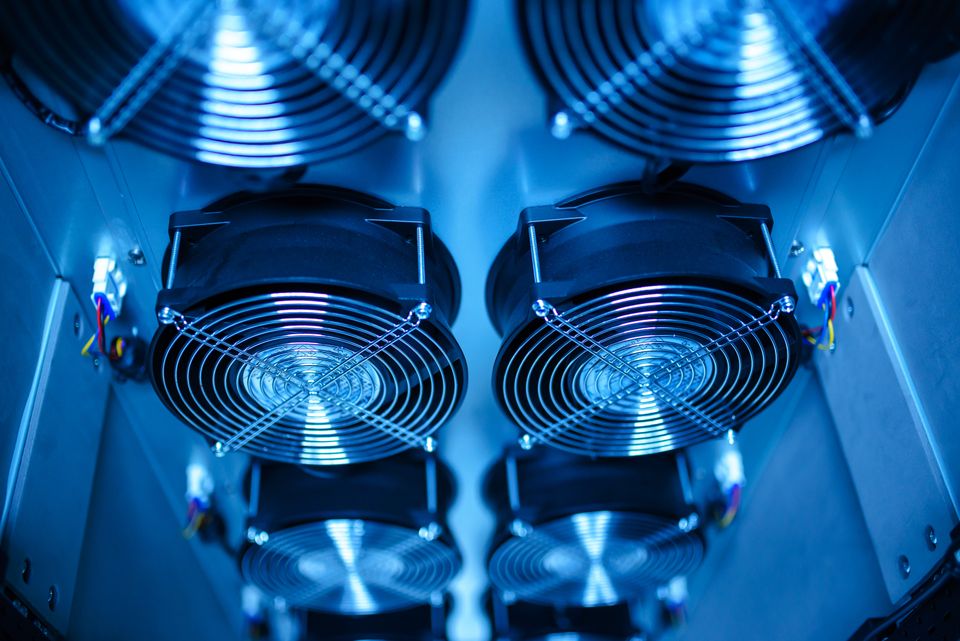
ChatGPT runs on racks of specialized chips inside data centers, and those chips generate serious heat. Many facilities keep servers cool with evaporative cooling, which lowers temperatures by evaporating water into the air. That water leaves the local supply instead of returning to it, so data centers truly consume it.
There is also an indirect water cost. Many power plants use large amounts of water for their own cooling, so the electricity that powers AI carries a water footprint of its own. Estimates that include this indirect share come out much higher.
Location changes everything. A data center in a cool climate can rely on outside air for much of the year, while one in a hot, dry region may lean heavily on evaporation. If you want the bigger picture of how these systems work, start with our plain-English guide to what AI is.
Where the electricity goes: training and answering
AI's energy use splits into two very different activities. Training is the process of building a model, where thousands of chips run around the clock for weeks or months. It is a large, mostly one-time energy bill paid before anyone asks the model a single question.
Inference is what happens when you actually chat. Each answer takes a small amount of compute, but multiplied across billions of daily requests it adds up. For widely used models, researchers now believe everyday answering accounts for the majority of lifetime energy use, not training.
How much water and energy per query? The honest ranges
On water, a widely cited academic estimate suggested that a batch of roughly 10 to 50 medium-length queries could consume about a small bottle of water, around half a liter, once cooling and electricity-related water were both counted. The figure rests on an older model generation and on assumptions the companies never confirmed, so treat it as a rough order of magnitude, not a fact.
On energy, researchers estimate that a typical text query lands somewhere between a small fraction of a watt-hour and a few watt-hours. In everyday terms, that is comparable to running an LED bulb for a few minutes. Long prompts, reasoning-heavy responses, and image generation sit at the higher end, while short questions to small models sit at the lower end.
Three things keep every estimate fuzzy:
- Companies publish limited data. Most figures come from outside researchers working backward from hardware specs and traffic guesses.
- Models keep changing. Newer models are often far more efficient, so older numbers can overstate today's footprint.
- Location and season matter. The same query can have a very different water cost in a desert summer than in a coastal winter.
Training footprint and everyday footprint are different questions
Training a frontier model is genuinely energy-intensive. Researchers estimate that a single large training run can use as much electricity as a small town over the same period, a real cost that grows as models get bigger.
But that cost is paid once and then spread across every answer the model ever gives. Divided over billions of conversations, the training share of any individual chat is tiny. For your personal footprint, the everyday inference number is the one that matters, and it is small.
How ChatGPT compares to streaming and search
Context helps more than raw numbers. Here is how researchers roughly rank common digital activities by energy per use. These are ballparks, not precise measurements.
| Activity | Rough energy comparison |
|---|---|
| One classic web search | At or below a short AI text query |
| One AI text query | An LED bulb running for a few minutes |
| One AI image generation | Several text queries |
| One hour of HD video streaming | Well above a handful of AI queries |
The takeaway: a normal day of chatting with an AI sits comfortably inside the range of digital activities you already do without a second thought. Knowing how AI models differ helps too, since a lightweight model answering a simple question costs far less than a heavyweight reasoning model working through a hard one.

What AI companies are doing about it
The industry has strong financial reasons to cut energy and water use, since both are major operating costs. Current efforts include:
- More efficient chips and models. Each hardware generation does more work per watt, and techniques like distillation produce smaller models that handle common questions cheaply.
- Smarter cooling. Closed-loop liquid cooling and free-air cooling reduce or eliminate evaporation, and newer facilities are increasingly sited in cooler climates.
- Cleaner power. Major providers sign long-term renewable and nuclear energy contracts, and several have pledged to replenish more water than they consume.
One honest caveat: overall demand is growing fast, so total consumption can rise even while each individual query gets cheaper. Efficiency per query and total footprint are separate trends, and both deserve attention.
What you can realistically do
First, keep perspective. Skipping AI entirely would barely move your personal footprint compared to choices about driving, flying, or home heating. Environmental impact is worth weighing alongside the other drawbacks of ChatGPT, but it should not dominate the decision for a typical user.
If you still want to trim your usage, a few habits genuinely help:
- Batch your questions. One well-written prompt often replaces five rounds of back and forth.
- Use smaller models for simple tasks. A quick rewrite or definition does not need a heavyweight reasoning model.
- Avoid endless regeneration. Refining your prompt beats re-rolling the same answer ten times.
The honest bottom line
Does ChatGPT use water and electricity? Yes, and across the whole industry the totals are large enough to matter for power grids and local water systems. Is your personal use a meaningful burden on the planet? Almost certainly not. A year of regular chatting compares to everyday activities you never think twice about.
The decisions that will actually shape AI's footprint are systemic: where data centers are built, how they are cooled, what powers them, and how transparently companies report the numbers. Reasonable pressure on those fronts will do far more than individual guilt over one more question.
Frequently asked questions
How much water does ChatGPT use per question?
There is no confirmed official figure. Researchers estimate that a batch of roughly 10 to 50 queries may consume about a small bottle of water once cooling and electricity-related water are included, but the range is wide and depends on the model, the data center, and the season.
Does ChatGPT use water directly?
Indirectly, yes. The chips that run ChatGPT sit in data centers that are often cooled by evaporating water, and the power plants supplying their electricity also use water. Your own device uses no extra water; the footprint sits in the infrastructure.
Is ChatGPT bad for the environment?
At an individual level, the impact of chatting with AI is small, comparable to other routine digital activities. At an industry level, fast-growing data center demand for electricity and water is a genuine concern, which is why siting, cooling design, and clean power contracts matter.
How much energy does one ChatGPT query use?
Researchers estimate somewhere between a small fraction of a watt-hour and a few watt-hours per text query, roughly like running an LED bulb for a few minutes. Image generation and long reasoning tasks use more; short questions to small models use less.
Ask any model, waste fewer queries
The simplest way to use AI efficiently is to match the model to the task. Chatgbot makes that easy by putting GPT-5.6, Claude, Gemini, Grok, DeepSeek and more in one app, so you can pick the right tool for each question instead of defaulting to the biggest model every time.